What we do
Detailed planting palettes and specification
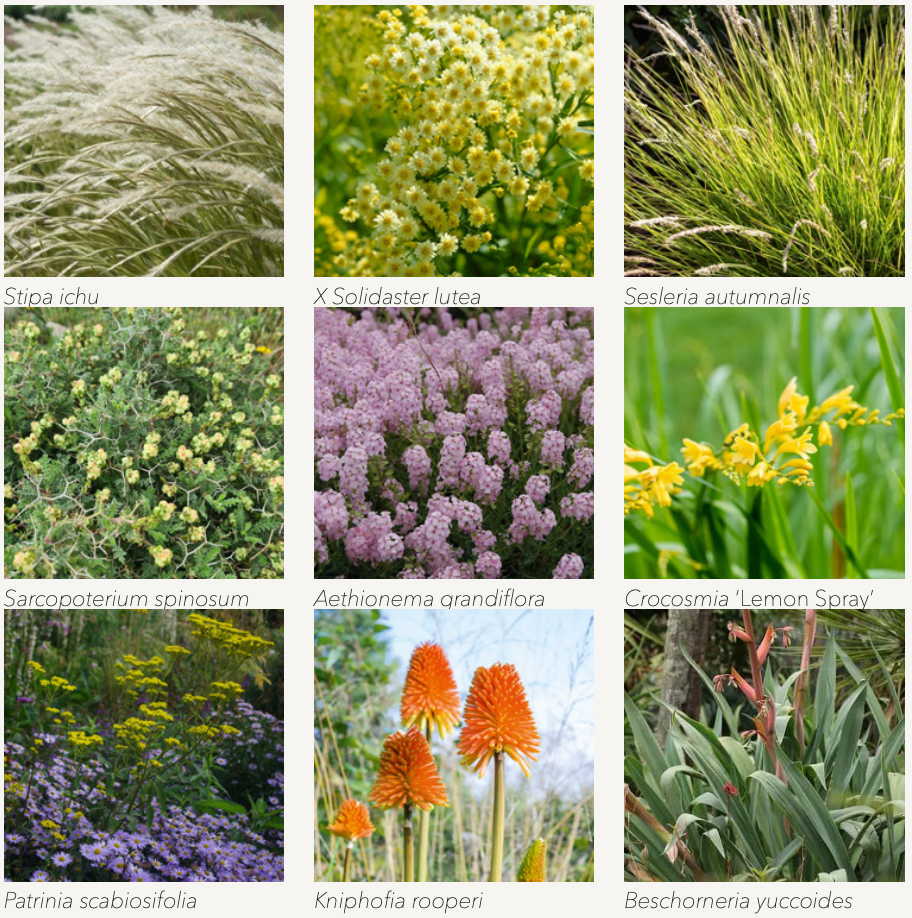
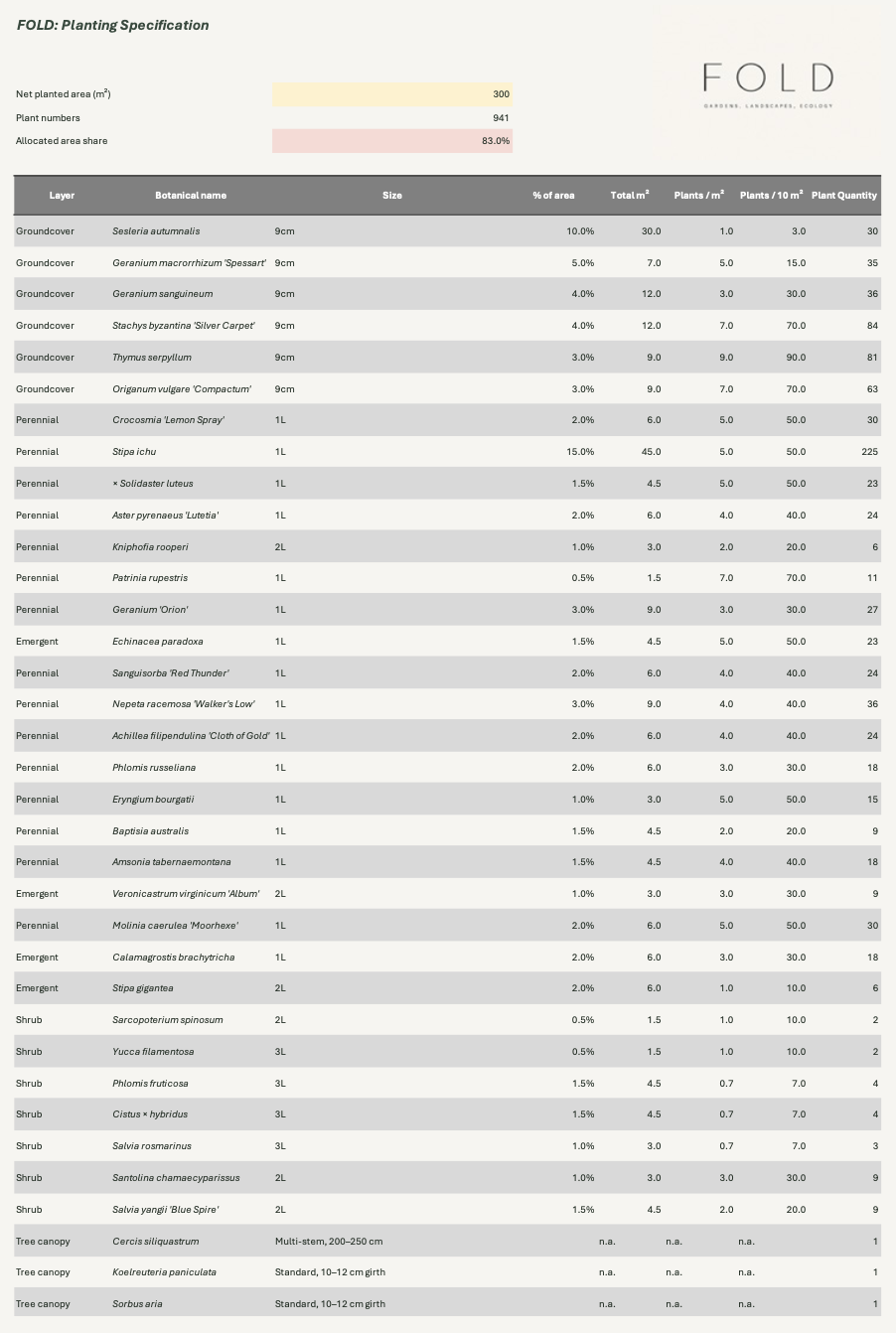
The detailed planting palettes and specification set out the proposed species, plant sizes, quantities and planting densities for each character area. Species mixes are matched for vigour and selected with an understanding of competition dynamics, considering how plants establish, spread and coexist to create balanced, functioning and dynamic planting communities. Appropriate spacing and densities encourage effective ground coverage, helping to suppress weeds and reduce maintenance input while allowing the planting to develop its intended character.
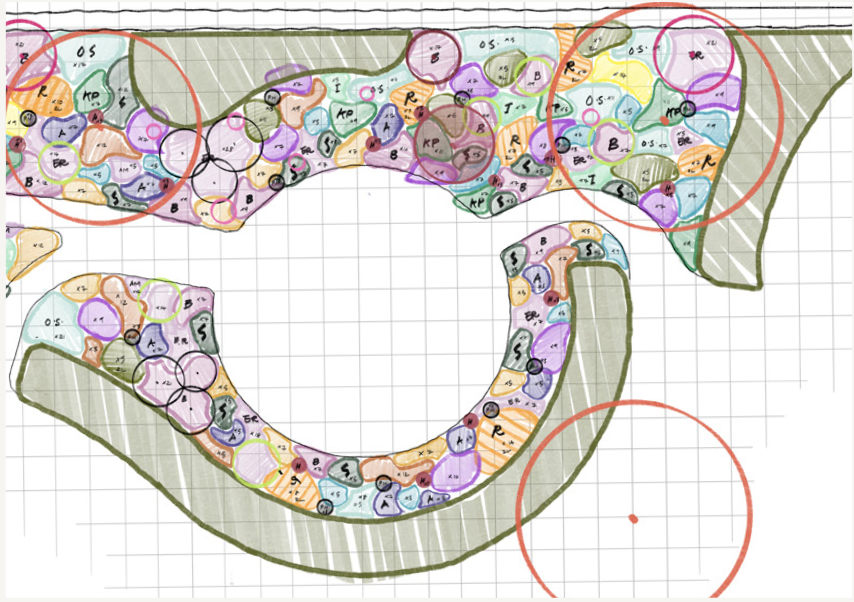
Sketch plans
Depending on the scale and complexity of a project, detailed planting specification plans may not always be necessary. Sketch plans provide a more economical approach, identifying the positions of significant structural species and the distribution of species mixes across the site. Used alongside planting palettes and clear guidance, they communicate the essential design intent while allowing flexibility in the precise placement of plants during installation.
Detailed planting plans
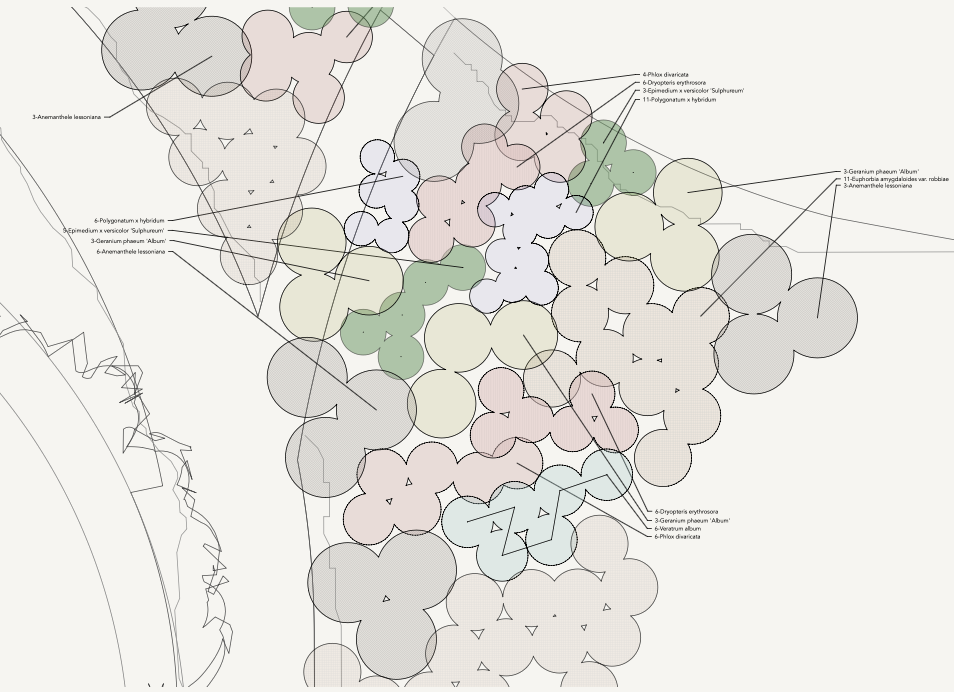
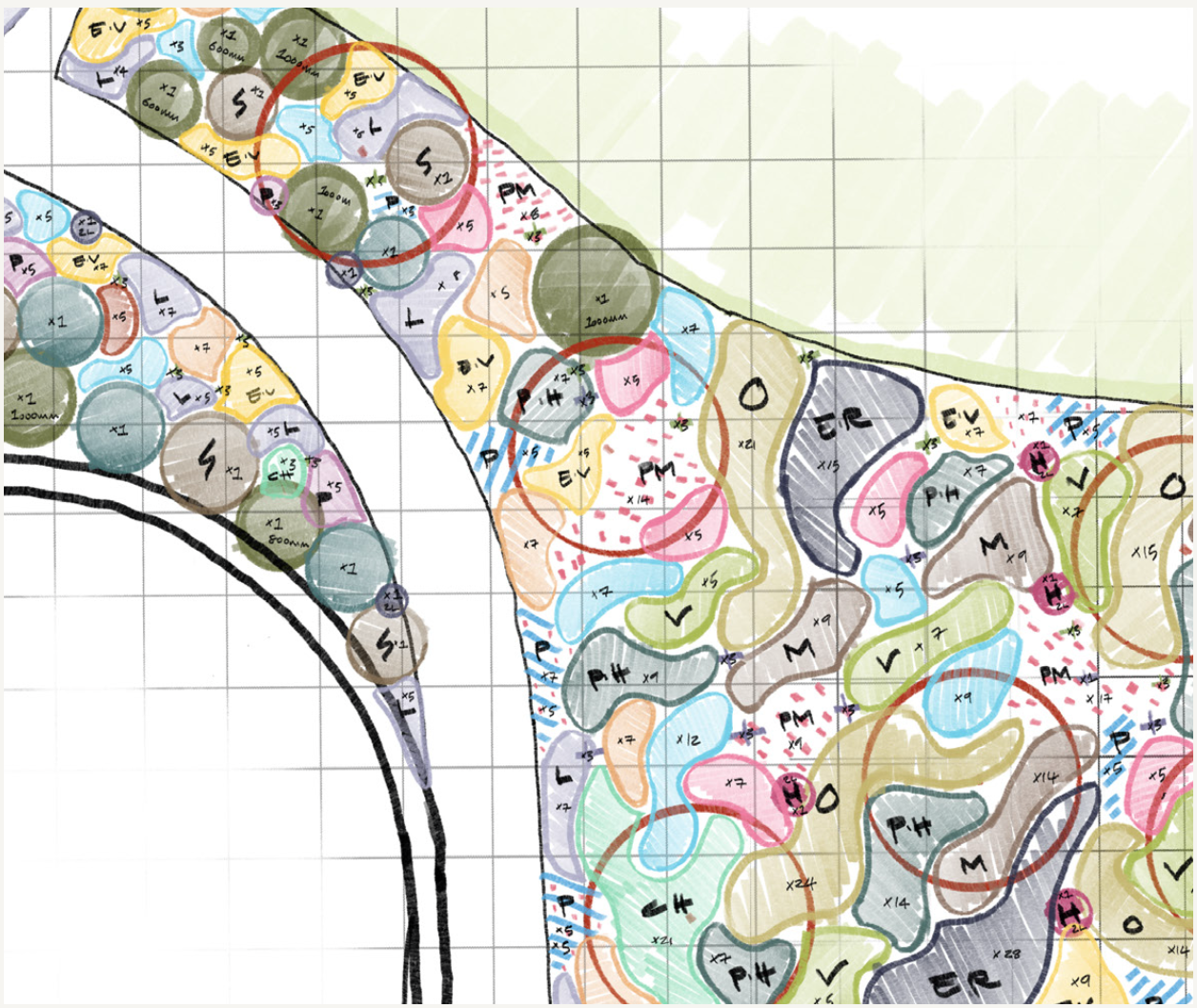
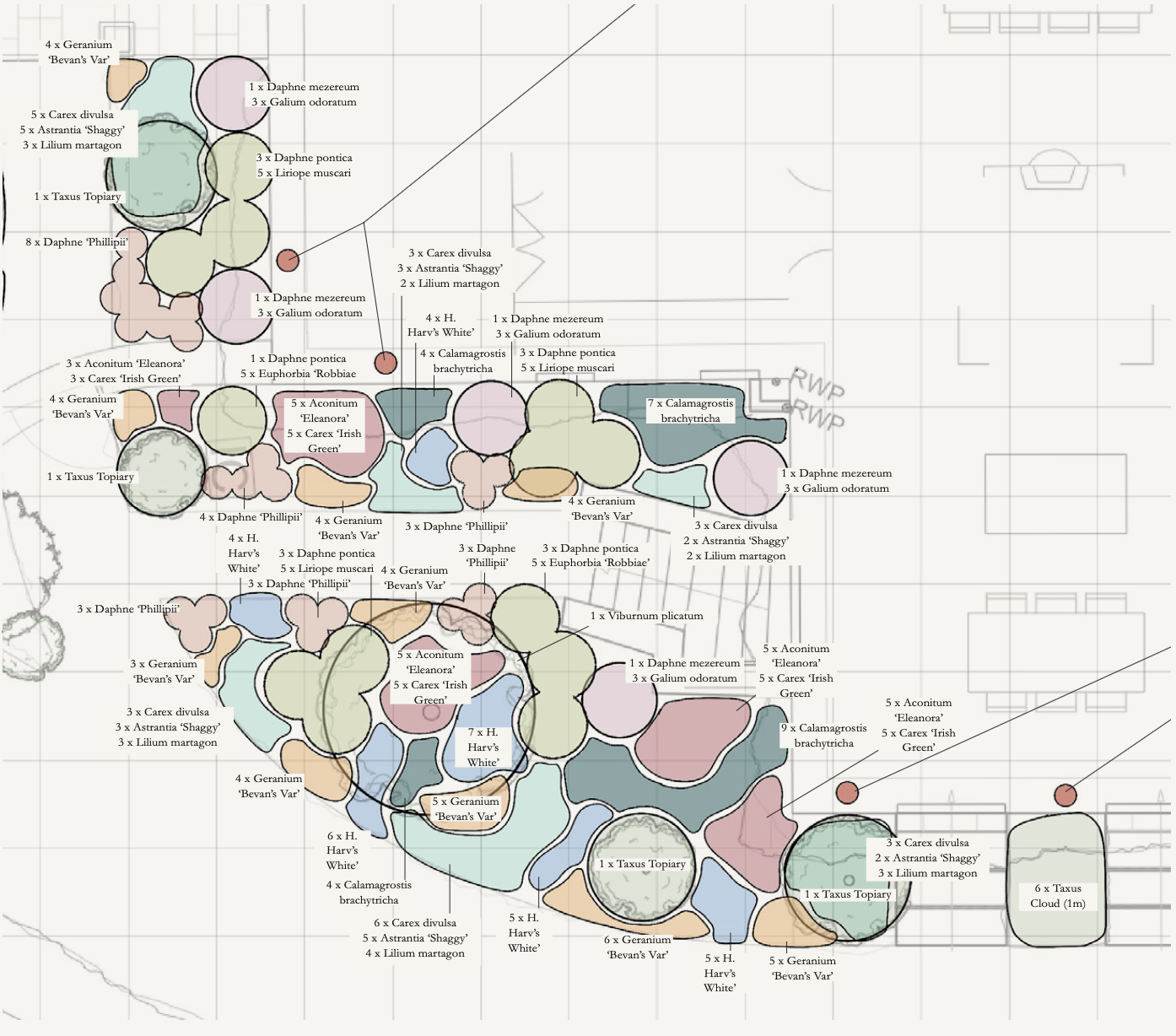
Detailed planting plans are typically used where setting out is carried out by the contracting team. Clear, easy-to-read drawings illustrate precise planting locations, species, quantities and spacing, providing the information needed to translate the design accurately onto the ground. Plants are set out by the contractors before the FOLD team reviews and refines their placement, making adjustments to suit site conditions and achieve the intended composition prior to planting.
Planting strategies for a changing climate
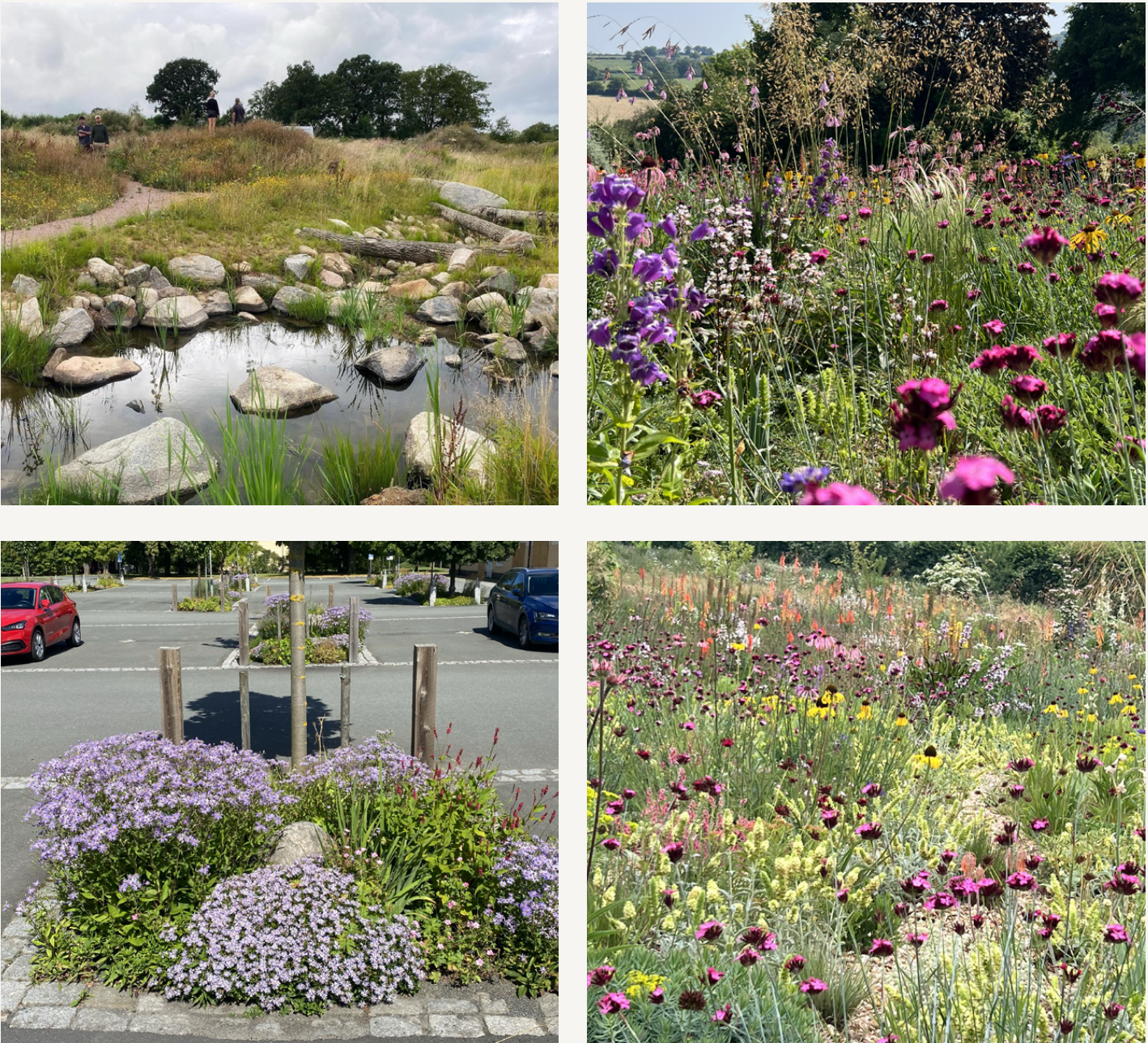
FOLD develops planting strategies for the increasingly complex conditions created by climate change, drawing on an understanding of how plants occur as communities within natural and semi-natural landscapes. Rather than treating drought tolerance as a list of resilient species, we consider the relationships between plants, substrate and water availability to develop planting that can respond to both drought and increasingly intense rainfall.
Within urban environments, extensive hard surfacing increases surface-water run-off, while the urban heat-island effect raises temperatures and evaporative demand. Planting can therefore face water abundance during intense rainfall followed by prolonged heat and drought. FOLD considers these conditions from the outset, exploring how substrate depth, composition, organic matter, drainage and water-holding capacity can support appropriate plant communities and resilient establishment.
For SuDS and other water-sensitive landscapes, we develop planting approaches that accommodate changing moisture regimes. We select and combine species according to their functional characteristics, natural habitats and ability to occupy different niches within a designed landscape. This supports diverse, resilient plant communities alongside the wider objectives of sustainable drainage, biodiversity and climate adaptation.
These principles are equally relevant at a domestic scale. For private clients and residential architects, FOLD translates ecological understanding into considered gardens that are both beautiful and functional. Planting responds to the microclimate, soils, aspect and water conditions of each home, providing seasonal change, structure and habitat. The result is a garden with a strong sense of place and character that extends the home’s relationship with its surrounding landscape, while reducing reliance on irrigation and intensive maintenance.
Where conventional approaches may offer insufficient resilience, we explore alternative substrates, reduced irrigation systems, pioneering plant communities and strategies informed by natural disturbance and succession. Through this approach, FOLD helps design teams and private clients create planting that can adapt as conditions change.
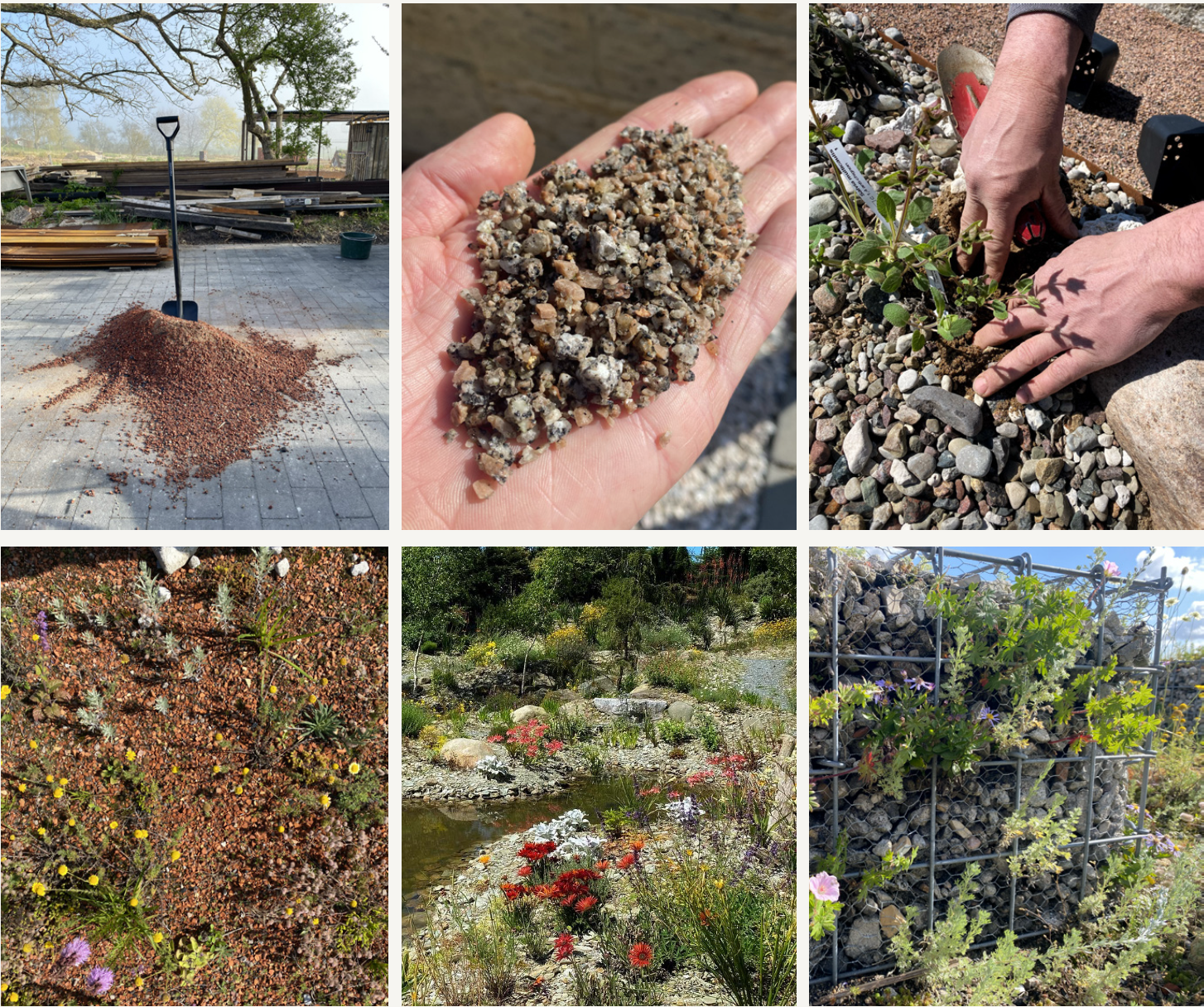
From top left to bottom right. Hoor planting by Peter Korn, Clayhanger, James Hitchmough planting detail, SUD scheme by Peter Korn, Clayhanger, James Hitchmough planting detail
Low maintenance and high diversity plantings
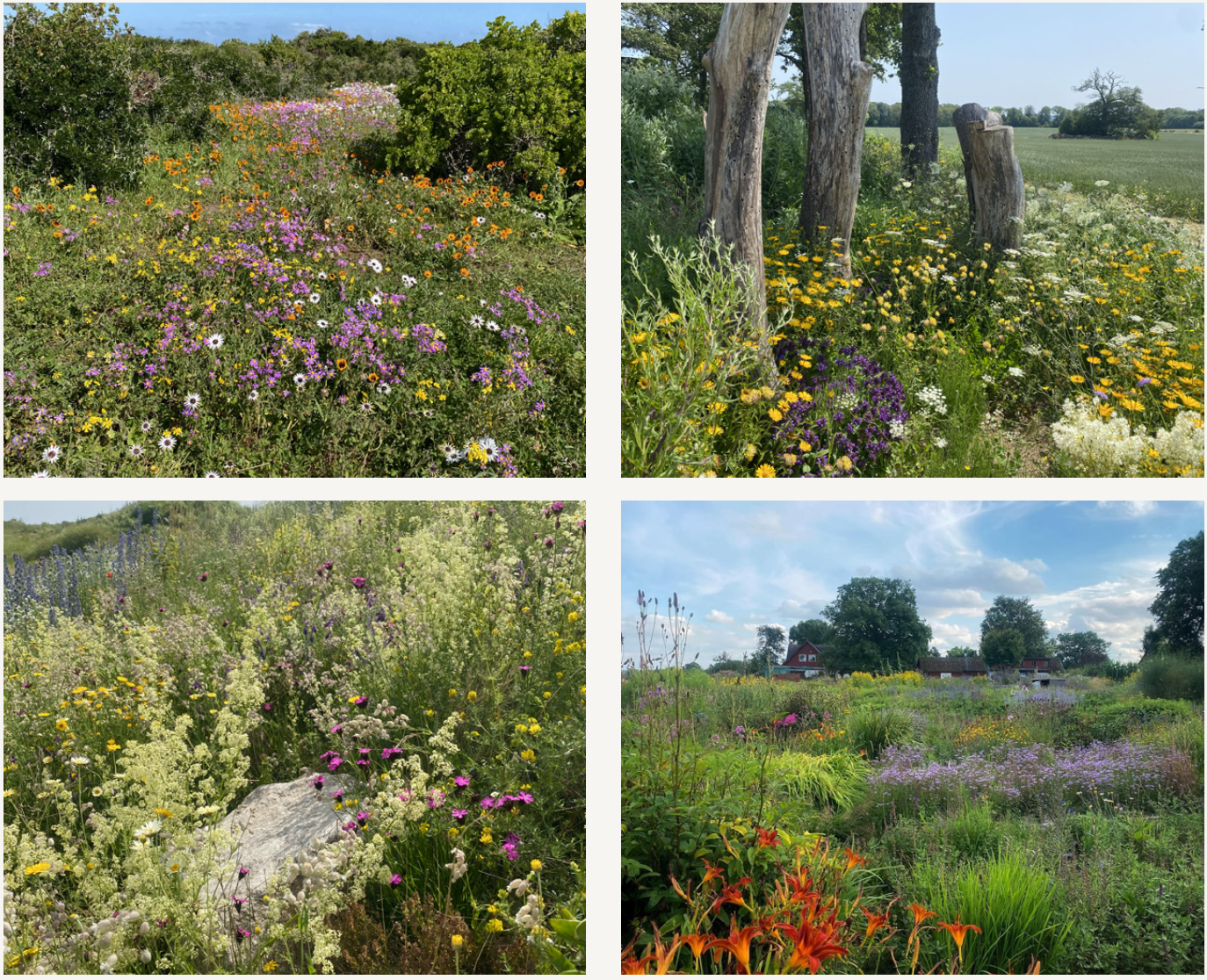
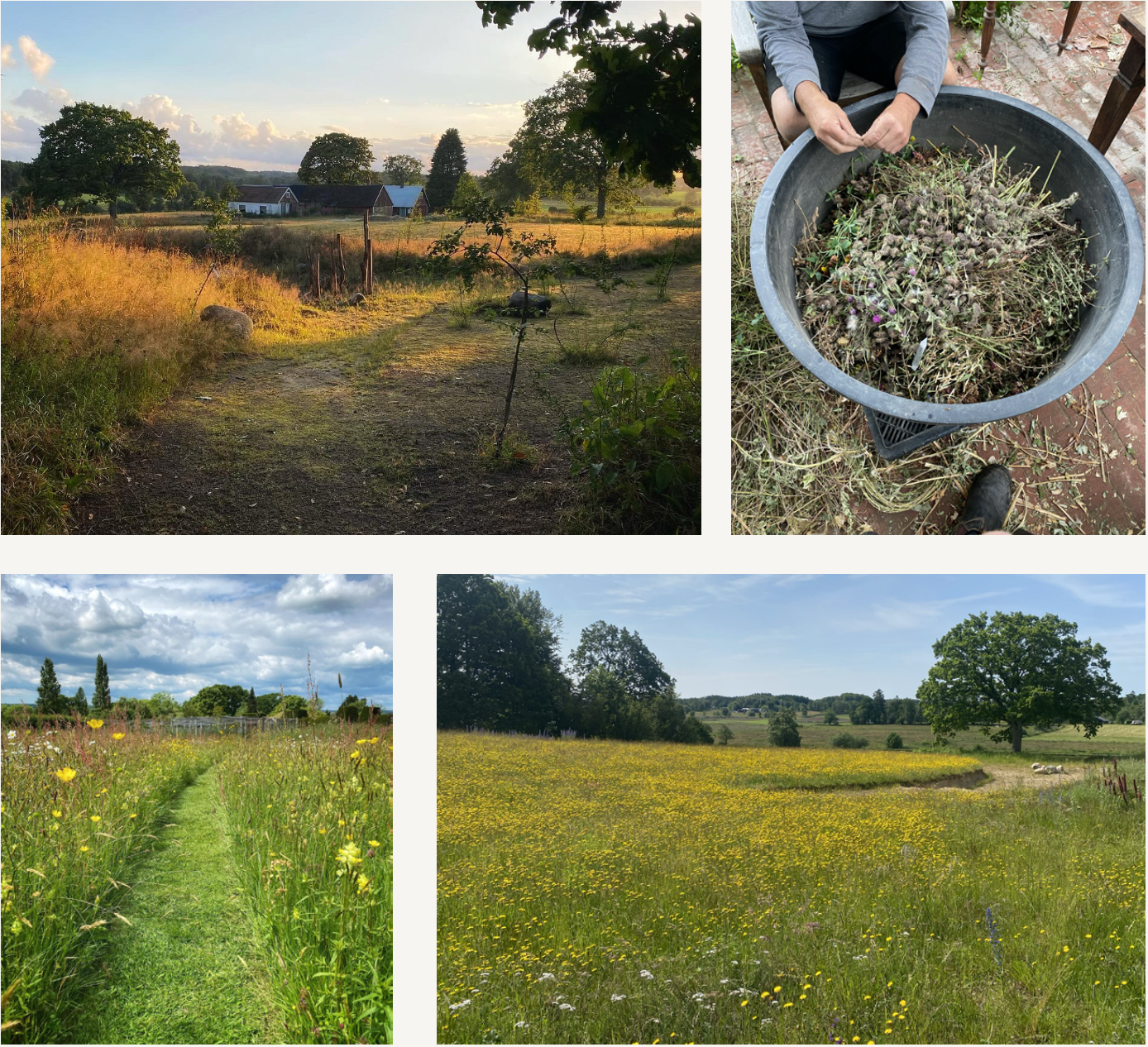
Top right image from Klinta, Peter KornLow-maintenance landscapes do not have to mean low-diversity landscapes. We are interested in creating planting that can deliver a rich and changing experience while requiring relatively little intervention once established. Our experience of working alongside practitioners such as Peter Korn and James Hitchmough has been particularly influential in developing this approach, demonstrating how careful plant selection, growing conditions and management can allow diverse plant communities to establish and persist without relying on intensive maintenance.
This has particular relevance to the public realm, where planting must perform within practical constraints of safety, access, maintenance and budget. Roadsides, verges, roundabouts, civic spaces and green roofs can all become opportunities for more diverse planting when the conditions are considered carefully from the outset. Rather than relying on frequent cutting, watering or replacement, we can develop planting communities that are suited to their environment and allowed to evolve over time. Direct seeding can provide a cost-effective way of establishing these communities, supplemented where appropriate with planted species to introduce particular structural, seasonal or ecological characteristics.
Our approach is also informed by the way plant communities respond to disturbance in natural landscapes, from steppe environments to other open, dynamic habitats. Disturbance can create opportunities for different species to establish, preventing planting from becoming static and allowing variation to develop over time. We can use this principle within designed landscapes, considering how mowing, cutting, soil disturbance, drought and other forms of intervention can be carefully managed to create greater diversity and seasonal change.
The result is planting that is designed to work with its environment rather than constantly being managed against it — creating landscapes that can become more established, diverse and visually compelling over time while reducing the resources required to maintain them.
Meadow specification and sowing
We see meadow planting as an opportunity to create dynamic, species-rich plant communities that bring together ecological value, seasonal interest and a strong sense of place. Our experience of establishing and managing meadows, including through our work at York Gate, has given us a practical understanding of how these environments develop over time and how careful decisions around soil, seed, management and establishment can influence their character.
Britain has a rich tradition of meadow creation and management, and we draw on both this knowledge and contemporary approaches to develop site-specific meadow schemes. We consider the existing soil, fertility, pH, hydrology, aspect and surrounding flora alongside the ecological and aesthetic aspirations of each site. This allows us to develop meadows that are appropriate to their setting, whether as intimate spaces within private gardens or larger landscapes within the public realm.
We can develop tailored seed mixes to reflect the character and requirements of a site, creating planting that can be both cost-effective and highly diverse. Where appropriate, seeding can be combined with plugs or additional planting to introduce greater structural, seasonal or ecological complexity.
Management is an integral part of this process. We can advise on approaches ranging from traditional techniques such as scything and hay cutting through to more experimental methods, including carefully considered disturbance and burning where appropriate. The aim is not simply to maintain a predetermined appearance, but to understand how management can be used to encourage diversity, respond to changing conditions and create different habitats within a larger landscape.
Through observation and ongoing management, we can also monitor how these communities establish and change, using what we learn to inform future interventions and introductions. This responsive approach allows meadow planting to develop with the site, increasing its ecological value while creating landscapes that are engaging, distinctive and rewarding for people as well as wildlife.
Maintenance consultancy and training
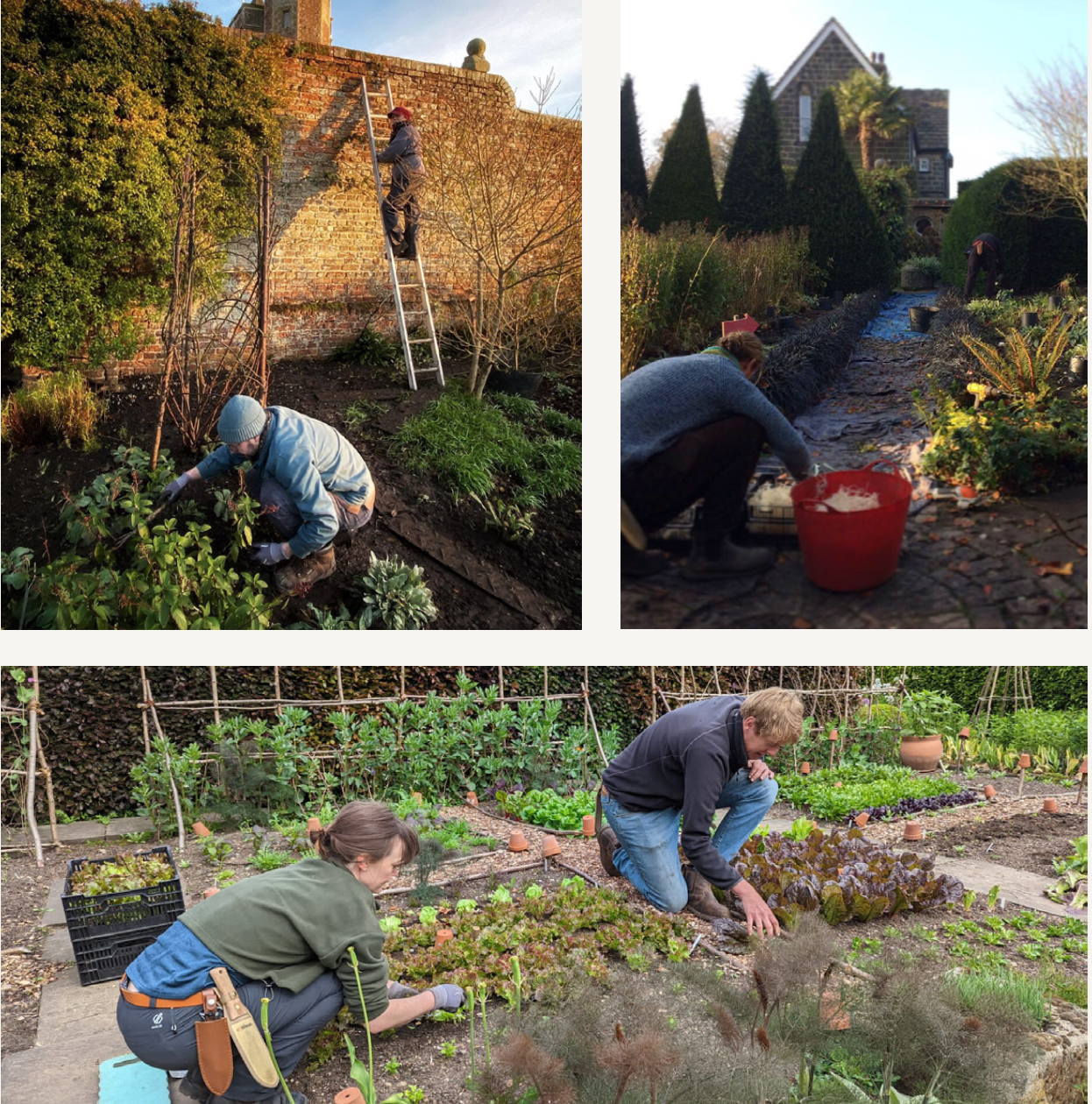
Good planting design does not end when a project is planted. Our practical experience as gardeners and plantspeople, working in gardens and landscapes including York Gate, Wildside, Sissinghurst and Clayhanger, gives us a detailed understanding of how planting develops, changes and responds to management over time. We bring this practical knowledge into our design work, considering not only how a planting scheme will look when established, but how it will be cared for, adapted and maintained throughout its life.
This connection between design and maintenance is fundamental to the way we work. We understand the practical realities of working with plants how they compete, spread, respond to cutting, need to be managed and change as communities mature. This allows us to provide maintenance advice grounded in practical experience and observation, tailored to the plants, site and resources available, rather than relying solely on generic maintenance guidance.
Maintenance can also become an important part of the character of a landscape. Depending on the aspirations and available resources, we can introduce traditional horticultural and landscape craft techniques such as scything, weaving, coppicing and staking, using these not simply as maintenance operations but as ways of creating structure, supporting plants and adding seasonal character to a space.
We also recognise that many landscapes are maintained by amenity teams working with machinery and within demanding operational constraints. We can advise on how mowing, cutting and other mechanical interventions can be used more creatively to maintain safe, accessible spaces while creating opportunities for greater habitat diversity and seasonal variation.
Our maintenance consultancy can range from periodic site visits and responsive advice through to the development of detailed, site-specific maintenance plans. Where a project requires particular skills or a different approach to conventional maintenance, we can also provide practical training and hands-on guidance for gardeners and maintenance teams, helping them understand not only what to do, but why it matters to the development of the planting.
Alternative Planting Substrates
We have particular experience in the use of alternative planting substrates, including sand, gravel and recycled mineral aggregates, and see significant potential for their application within public-realm, architectural and green-roof landscapes. These materials can provide an alternative to conventional topsoil, creating planting systems that are well suited to exposed, lightweight and demanding environments. Free-draining mineral substrates can absorb rainfall rapidly while retaining sufficient moisture for plant growth, helping planting respond to increasingly unpredictable patterns of drought and intense rainfall without becoming saturated or forming a hard surface that promotes runoff. Their low-fertility character can also reduce weed germination and subsequent maintenance inputs, while allowing carefully selected plant communities to establish and develop over time.
These characteristics also make mineral-based substrates particularly interesting for green-roof applications, where weight, drainage, water retention and nutrient availability are critical considerations. Carefully designed sand, gravel and aggregate-based growing systems can support diverse, drought-tolerant plant communities while reducing reliance on irrigation and intensive maintenance. There is also an opportunity to specify locally available or recycled aggregate streams as growing media or surface substrates, giving materials that might otherwise be treated as waste a useful role within the landscape and improving the material efficiency of a project.
Our approach has been informed by the pioneering work of Peter Korn, particularly his use of sand-based planting in public landscapes, and by James Hitchmough’s extensive research into establishing plant communities directly onto sand and his use of recycled 20-30mm gravel as a weed suppressing planting medium. We see these approaches not simply as horticultural techniques, but as a means of integrating planting, material reuse, water management, roof design and long-term maintenance into the architecture and landscape of a project.
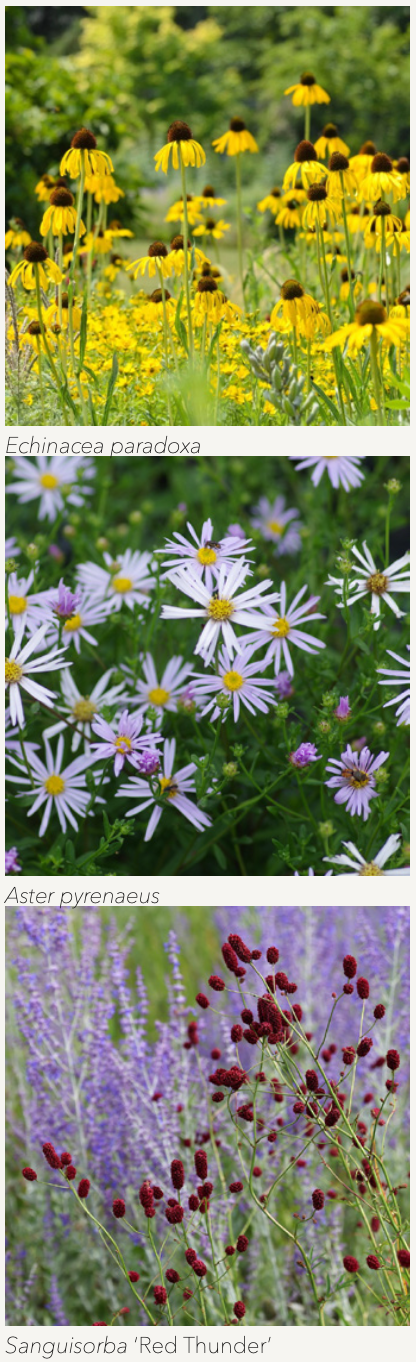
Tribute Garden, Wildside by Keith WileyBare-root planting and growing
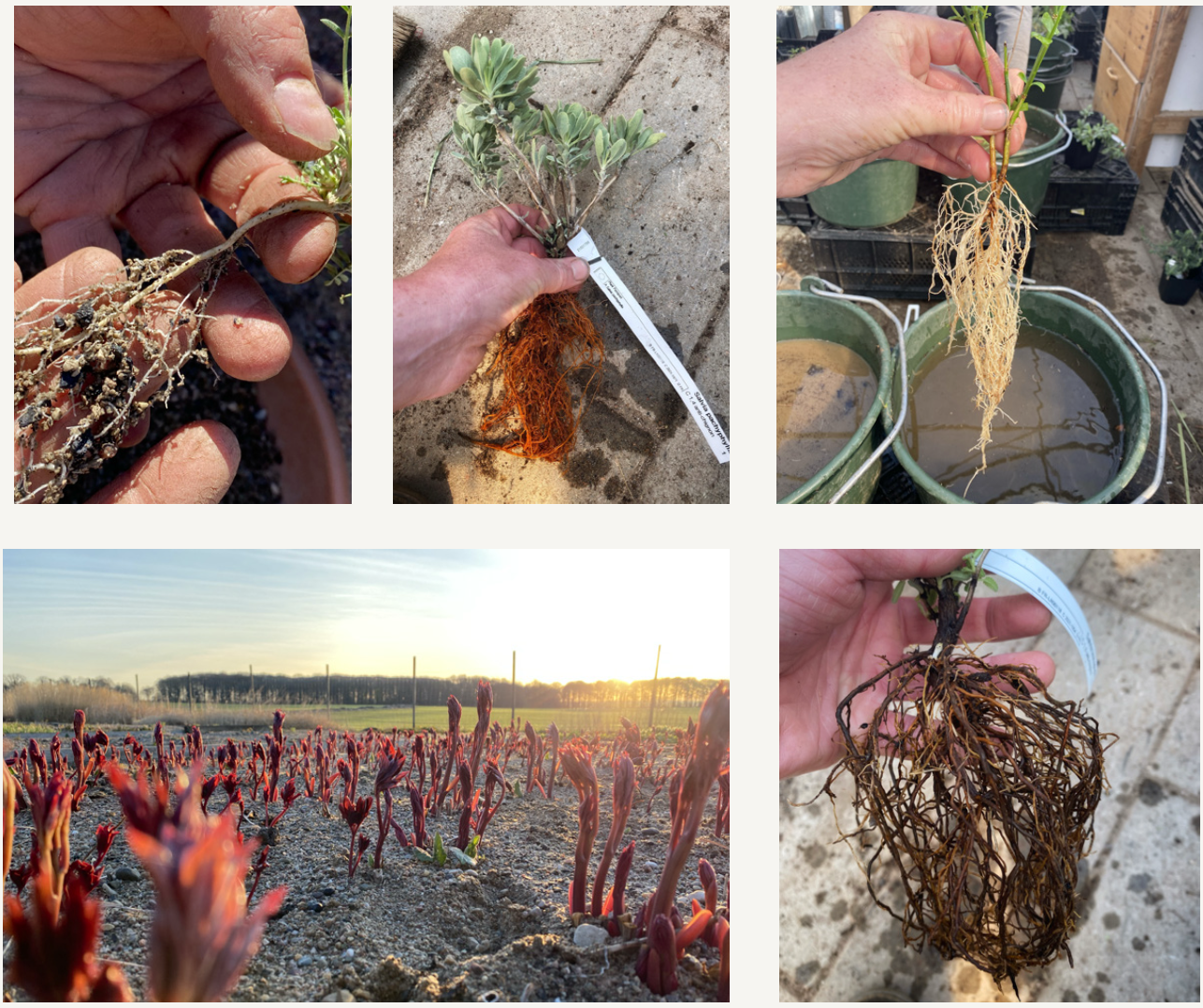
FOLD is developing an approach to bare-root planting in the UK, informed by our collective experience of working with Peter Korn and James Hitchmough, industry leaders in this field. These relationships have shaped our understanding of bare-root and sand-based planting, diverse plant communities and low-input growing systems. This experience informs how we select, grow and establish plants, bringing plant production and planting design into closer dialogue.
We are now developing our own small-scale sand-bed nursery, allowing us to grow and observe a selection of plants that are not readily available through conventional commercial nurseries. Plants are selected for their suitability within diverse plant communities, their response to changing climatic conditions and, where appropriate, their provenance and ecotype. Growing and observing plants ourselves allows us to build knowledge of their performance before introducing them into designed landscapes.
Supplied bare-root, these plants can be established across a range of growing conditions, including conventional soils, mineral substrates and aggregate-based systems. They are particularly suited to sand-based planting, where their establishment can be closely aligned with the low-fertility, free-draining conditions in which many of these plants naturally thrive. Bare-root planting also offers significant potential for establishing large and diverse areas of planting efficiently, reducing the reliance on container-grown material and the associated costs of production, transport and establishment.
We see bare-root production not simply as an alternative way of supplying plants, but as an important part of a different approach to planting. It allows us to connect plant production, substrate, plant communities and climate adaptation much more closely, creating opportunities for highly diverse and ornamental landscapes that can be delivered at a range of scales and budgets — from private gardens to large public landscapes.
Please note that not all of the images above depict work undertaken by FOLD, they are used for illustration purposes only. We have used them because they have inspired our approach and are by people whose work we greatly admire.